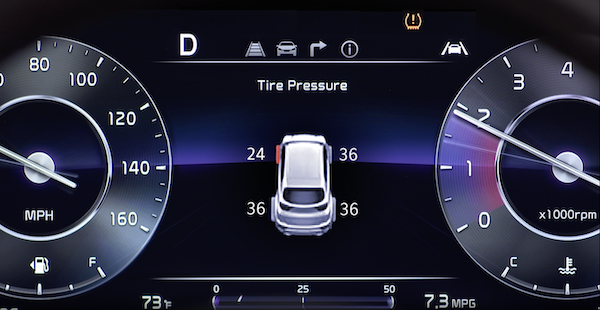
Tire Pressure Monitoring System (TPMS)
 The TPMS indicator functions as both the Low Tire Pressure Light and the TPMS Malfunction Indicator.
The TPMS indicator  will illuminate if it detects one or more tires are significantly underinflated, the vehicle has a tire installed without a TPMS sensor or the outside temperature becomes significantly lower.
Inflate tire(s) to specifications using an accurate tire pressure gauge to turn off Low Tire Pressure Indicator . See front driver’s door jamb for air pressure specification.
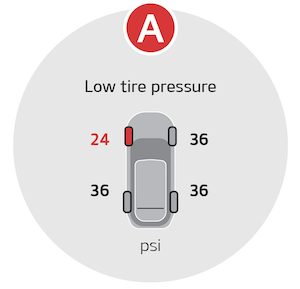
The Low Tire Pressure Position Indicator  is displayed on the LCD screen in the Instrument Cluster when the tire(s) is underinflated.
When there is a problem with the TPMS, the TPMS Malfunction Indicator will blink for approximately one minute and then illuminate. See the dealer for service.
*See LEGAL page for legal information
Images are for illustrative purposes only and may not reflect actual display. Refer to section 6 in the Owner’s Manual for more information.
Always check the Owner’s Manual for complete operating information and safety warnings.